
Announcement: Expanding Platforms
Exciting news… The Lone Liberal Republican is now on Substack! Check out our page.
See below for our first two posts:
Introduction to the Lone Liberal Republican
The premise of the Lone Liberal Republican project is that politics in America have become stale and rigid over the last few decades, and to the extent they have broken out of this sclerosis recently, they have broken out in illiberal, angry ways. The revival of the liberal branch of the Republican Party could contribute to making our crazy politics more sensible. Just a handful of liberal Republicans in Congress– probably elected from Republican leaning districts whose voters increasingly find MAGA problematic, or Democratic leaning ones which have gone too progressive for many constituents’ tastes – could be the fulcrum on which a more pragmatic, consensus-oriented politics could pivot.
The Lone Liberal Republican project is not an attempt to resurrect a party faction or relitigate past battles. It is an effort to restore a way of thinking—one that treats political disagreement as normal, history as instructive, and governance as a serious responsibility.
Thanks for reading The Lone Liberal Republican! Subscribe for free to receive new posts and support my work.
You don’t need to agree with every argument here. You don’t need to adopt the label. You only need to be willing to think beyond the binaries that increasingly dominate our politics.
Regardless of your party affiliation (or lack thereof), hopefully you will discover things here that you find interesting and useful, especially if you think of yourself as politically in the middle, or you feel that today’s political choices don’t reflect the complexity of your views. If you yearn for a less angry, more civil, “I could live with that” politics, we hope to provide you with ideas to help you make more civil politics a reality. If you believe that better governance is both possible and necessary, and that the path to that is more pragmatic, consensus-oriented politics, please read on.
Few Americans under the age of sixty are even aware that there was a vibrant liberal wing of the Republican Party—not only in Abraham Lincoln’s and Teddy Roosevelt’s times, but as recently as the 1970’s. This Substack and the companion website www.theloneliberalrepublican.org will help you understand what Liberal Republicans believed (and still believe, even if they no longer call themselves liberal Republicans), and how that might be resurrected. After all, you can’t bring back something you never knew existed.
To that end, some of these posts will cover current events, while others will cover policy matters. Yet others will introduce you to historic Liberal Republicans.
If you’re new to The Lone Liberal Republican project (we have actually been around for years, with tens of thousands of visitors to the Lone Liberal Republican website annually and more than 10,000 followers on Facebook), here’s how we suggest you approach the content:
● Read the next post explaining what I think it means to be a Liberal Republican (whether one self-identifies as a Liberal Republican, like me, or not).
● Read one historical and/or biographical piece – for example, one about famous liberal Republican Congresswoman Millicent Fenwick or another about Republican President Ronald Reagan battling with progressive Democratic Speaker of the House Tip O’Neill to understand the political tradition this project draws from.
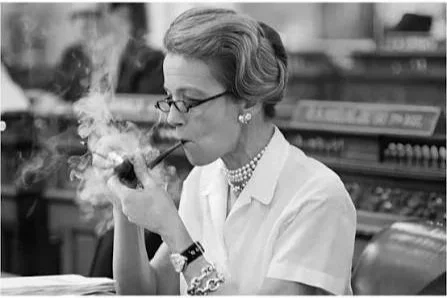
Millicent Fenwick
● Explore a policy essay – for example, this one on immigration and identity politics – to see how historical lessons and a pragmatic, consensus-oriented filter can inform modern debates about governance, regulation, and opportunity.
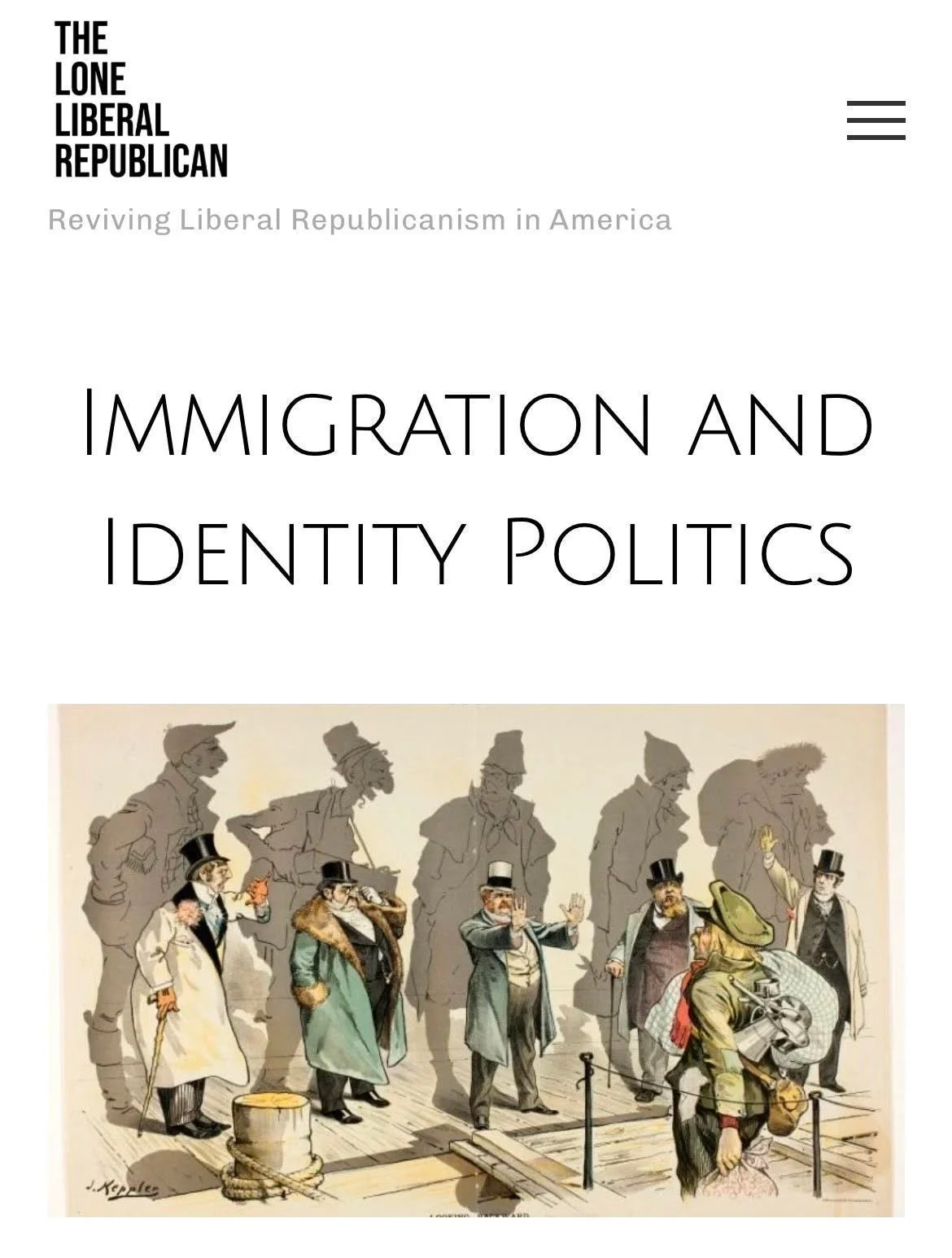
“Looking Backward to Move Forward”
***
This publication is not designed for instant takes. It is meant to be read slowly, revisited regularly, and used as a resource to inspire fresh thinking about what American politics can be.
We hope you will enjoy reading and watching these posts, and share them with others who might. Together, let’s try to make American politics sane again. (If you would like a free mug like the Make America Sane Again one pictured above, please reach out at theloneliberalrepublican@gmail.com).
What is a Liberal Republican?
The Lone Liberal Republican project isn’t so named to raise eyebrows, or anger progressives or conservatives. It is so named because when I was a young adult, there was a vibrant wing of liberal Republicans in the Republican Party, to which I was an adherent. It included the politicians below, and many others. Click the links below to read short biographies of these folks. Most younger people who read these biographies find it surreal that the Republican Party was full of politicians like these.
George Romney
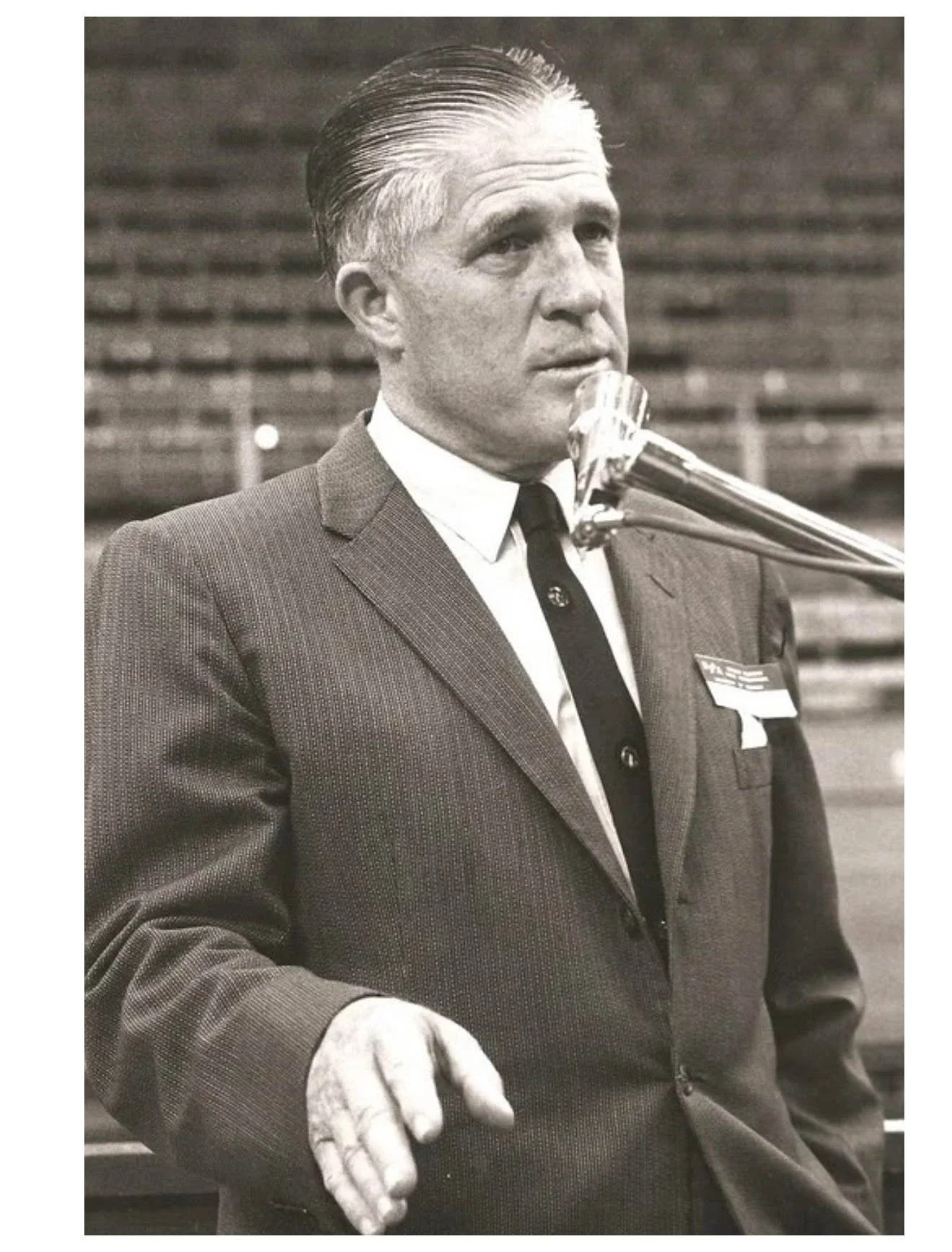
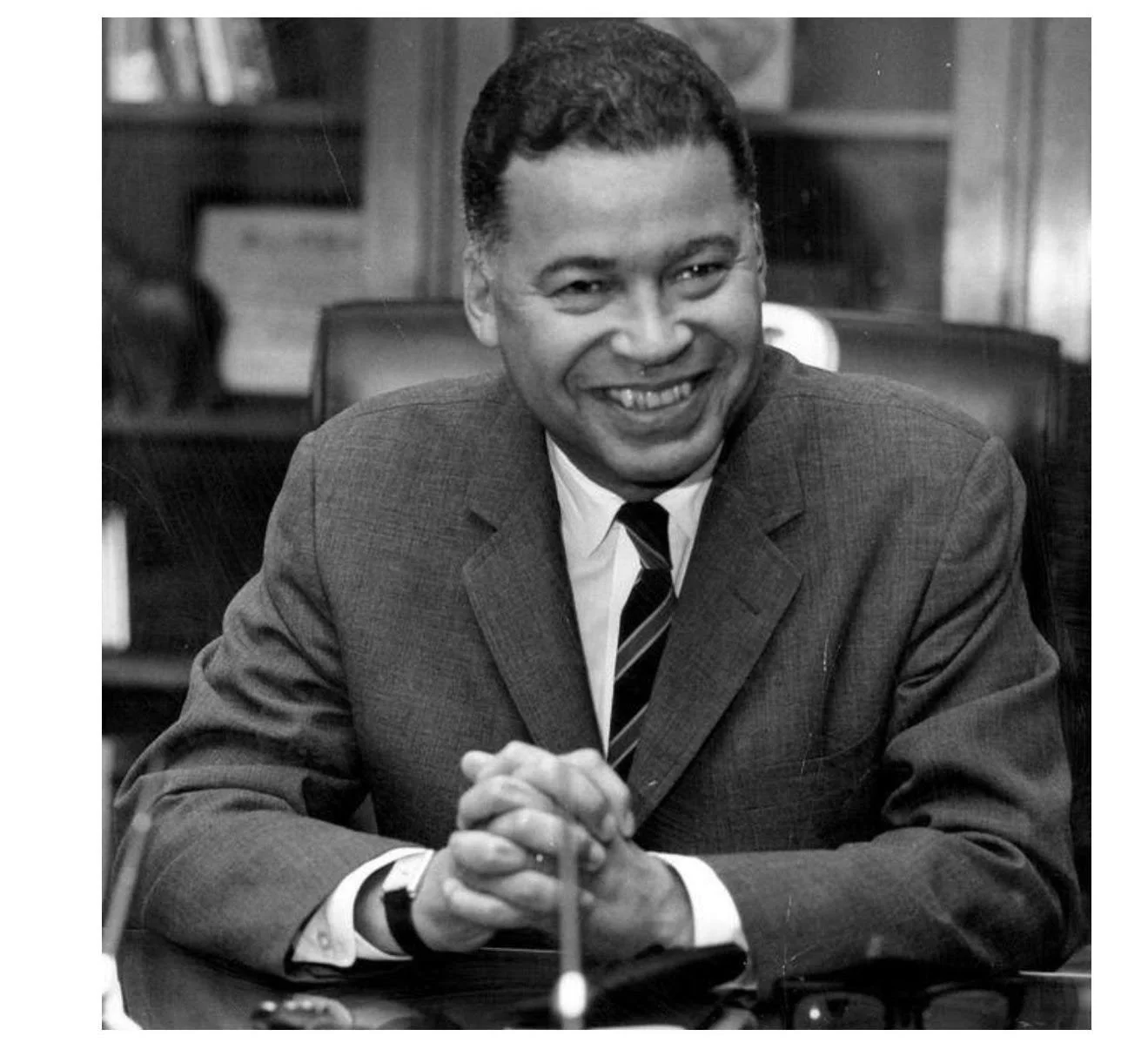
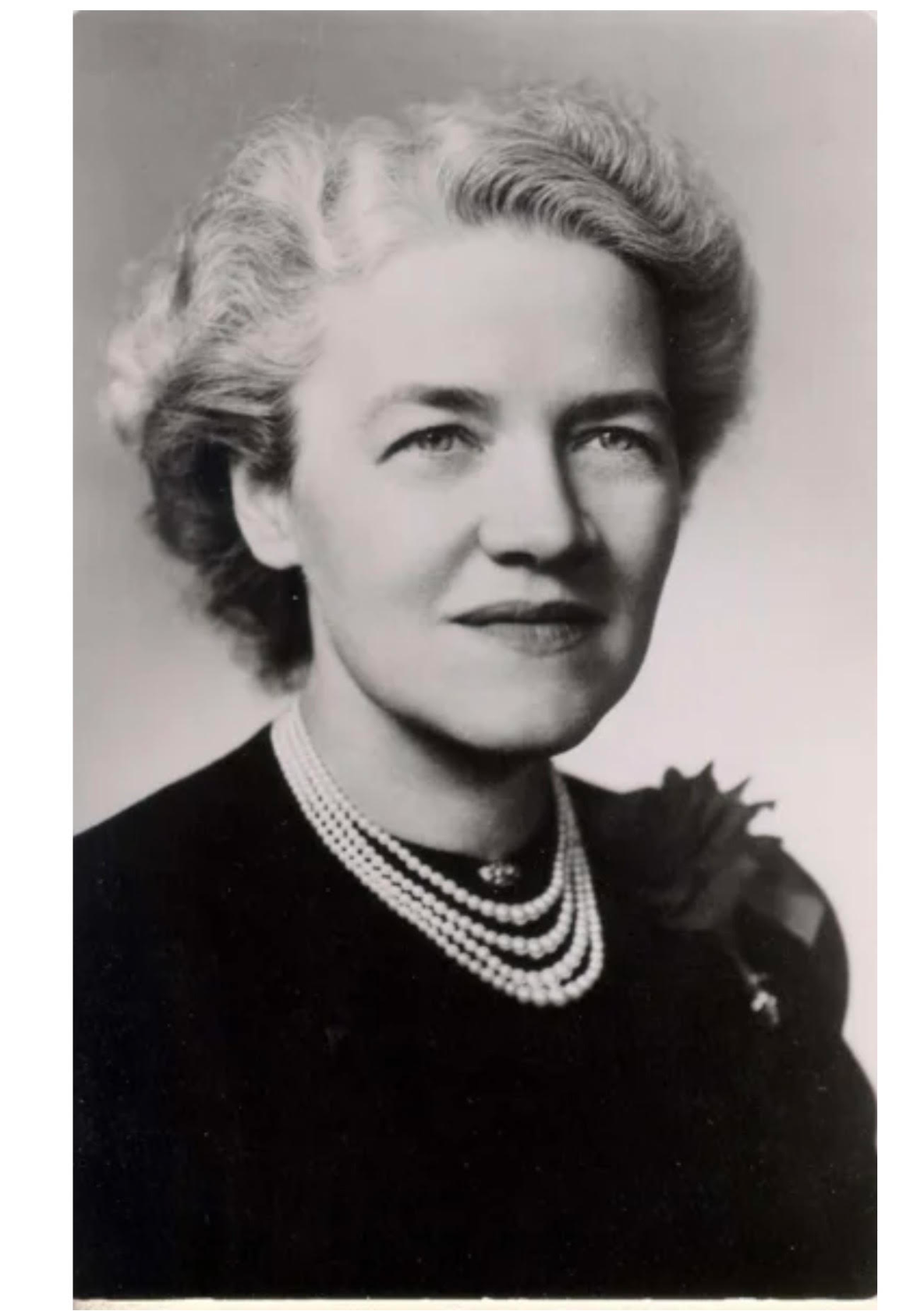
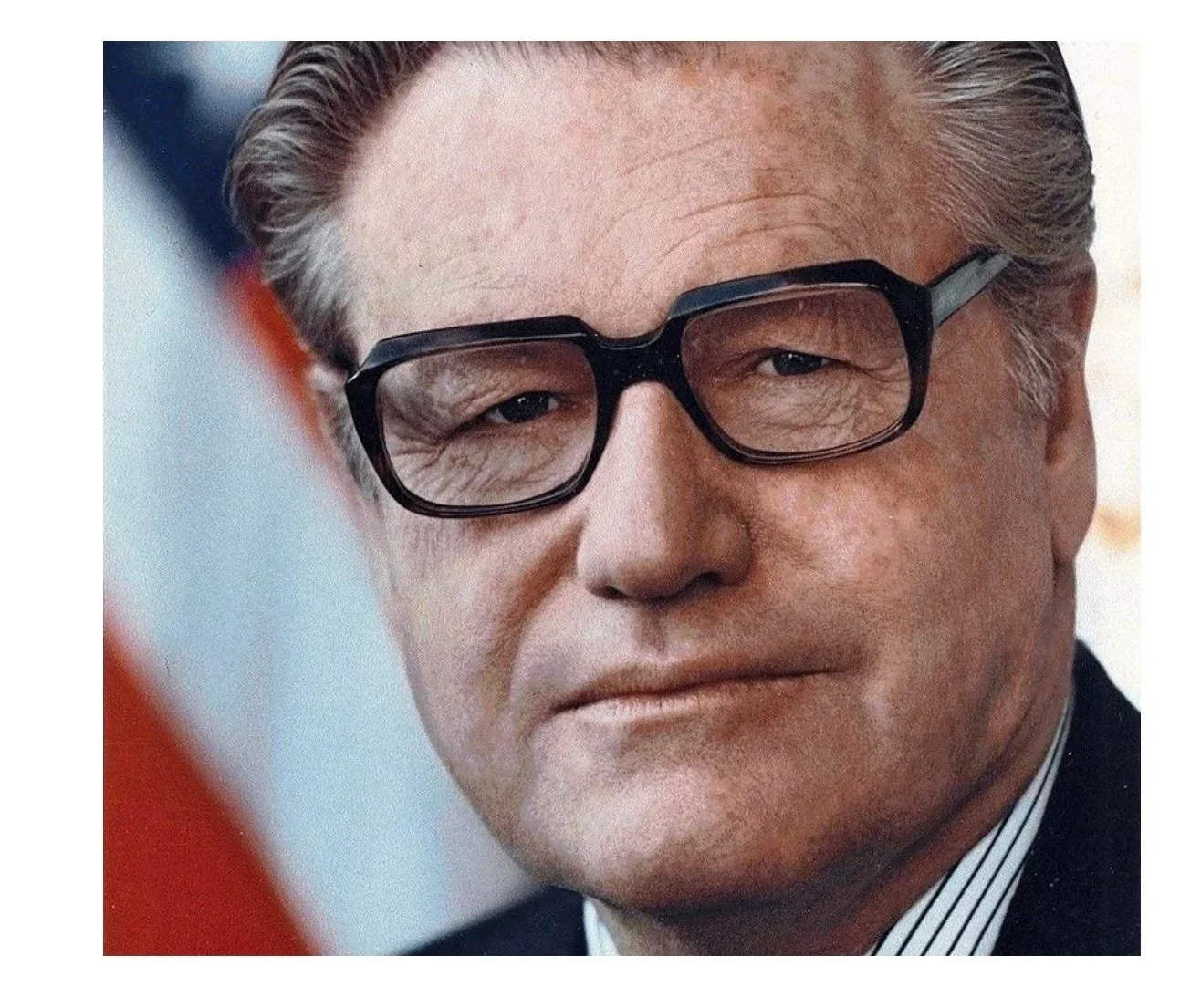
One of this project’s principal goals is to bring such politics back.
But you can’t bring back something you don’t know ever existed, and if you are under the age of sixty, you probably don’t know these folks used to be a major part of the American political landscape. As you can probably imagine, their existence made compromise across party lines easier.
I felt—and continue to feel—that these Liberal Republicans not only best describe my personal politics, but represent a politics where many Americans today could find common ground. A politics that might appeal to a great many Americans if they were aware of its existence, and to others for whom Liberal Republican politics would represent an “I could live with that” politics. In a nation that badly needs such pragmatic, consensus-oriented politics—as opposed to the hateful, destructive politics that dominates today—this would be a good thing.
So let’s unpack what “liberal” actually means, and why I self-identify as a Liberal Republican, despite the state of today’s Republican Party.
For readers who want the one sentence elevator pitch, I identify as a Liberal Republican because I believe in liberal values like the rule of law, individual (not group) rights, and tolerance, and I believe that good public education and public safety (national defense, domestic policing, incarceration) are best handled by the government, but most else, like housing and job creation, are better handled by the private sector.
1. Liberal
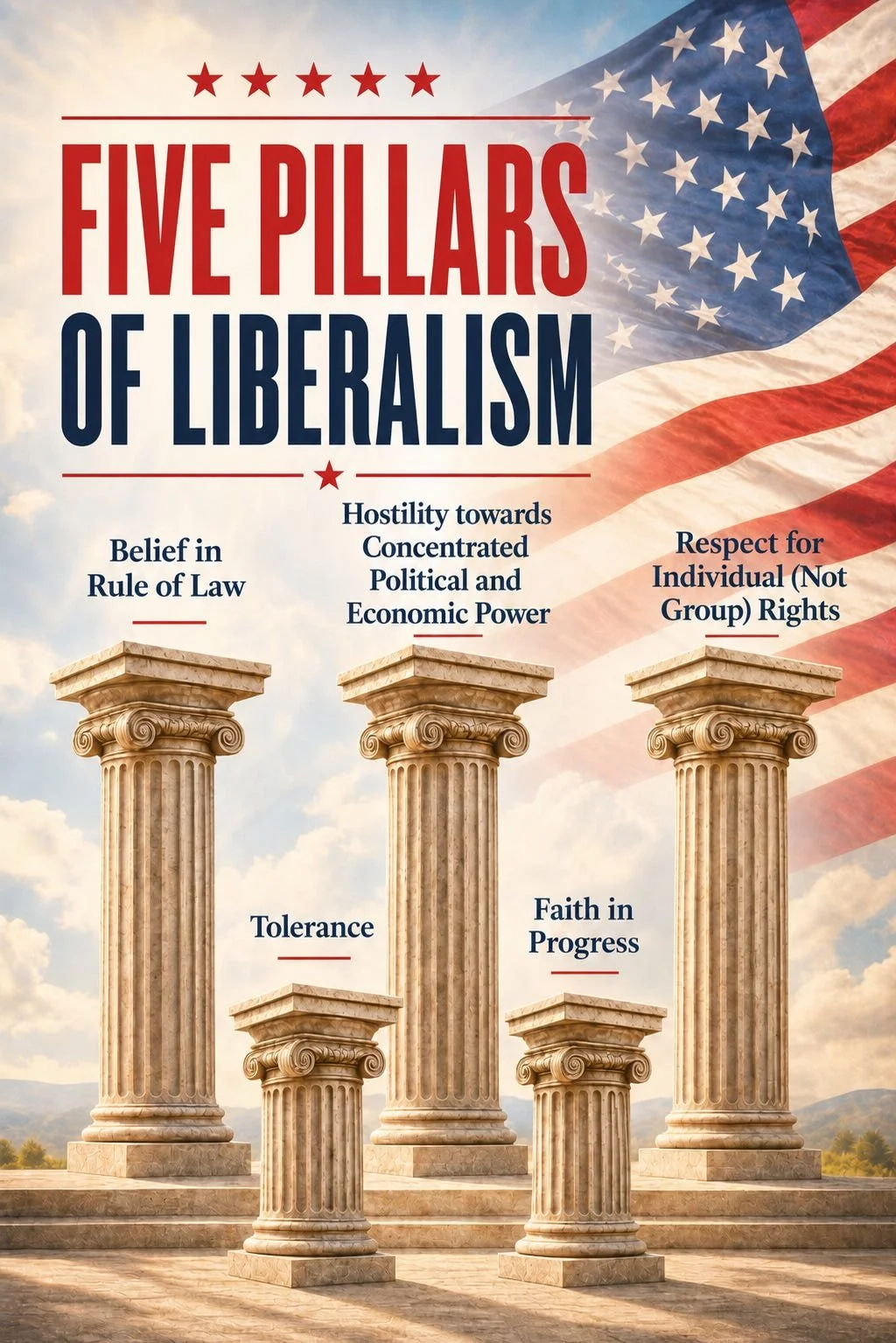
So what does it really mean to be liberal? Edmund Fawcett’s Liberalism: The Life of an Idea does a good job of simplifying a complex topic. According to Fawcett, liberalism incorporates a wide variety of political beliefs, most importantly the following: (i) the belief in constitutional government and the rule of law; (ii) a hostility to concentrated economic and political power; (iii) faith in progress; (iv) respect for people’s individual (not group) rights; and (v) tolerance. Liberals come in many varieties, prioritizing these beliefs differently and holding them to different degrees.
As a nation we have lost sight of what the terms “liberal” and “liberalism” really mean and, in doing so, we arguably have also lost the capacity to distinguish liberal from illiberal politicians. For instance, during the 2008 election cycle, one side of the political aisle accused former President Obama of being illiberal, while the other side accused the late Senator John McCain of the same. In fact, they both were advocates of liberal values, as are many other conservative Republican and progressive Democratic politicians. In our confusion, we elected, then re-elected eight years later, an illiberal President, who governs illiberally—that is, based on “ might makes right”, without any rules or constraints that must be obeyed—with all the abuses of power and intolerance that fundamentally distinguish a liberal government from an illiberal one. Does President Trump believe in item (i), (ii) or (v) above? Or even (iii) and (iv)? (Incidentally, looking to 2028, I think J.D. Vance’s political instincts are fundamentally illiberal, while Marco Rubio’s are fundamentally liberal. It’s an important distinction for 2028, even if both are politically conservative and currently doing the President’s bidding.)
2. Republican
Why do I regard myself, and so many Americans I know, as Liberal Republicans at heart rather than as moderate Democrats? For many of us who regard ourselves as somewhere in the middle politically, I believe that there are two major issues that separate most who would identify as Republicans from those who would identify as Democrats. The first is whether we regard the government or the private sector as more capable of handling most problems, with Republicans generally arguing for private sector solutions and Democrats leaning to government ones. I identify as a Liberal Republican because I believe that good public education and public safety (national defense and domestic policing and incarceration) are best handled by the government, but most else, like housing and job creation, are better handled by the private sector. I believe that government regulation is important, but should be simple, clear, and enforceable. Regulation that provides a feeding frenzy for lawyers and lobbyists is highly problematic and often counterproductive. I also believe that those guilty of violating laws should be more severely punished, in a manner commensurate with the harm created by their deeds. (This is rarely true in America today for “white collar” crime.) In contrast to these Liberal Republican views, my Democrat friends are much more likely to be suspicious of business, and see the government as having a much bigger role in an ideal society, such as providing housing and jobs and regulating comprehensively and heavily.
The second issue that separates those of us who are somewhere in the political middle but regard ourselves ideologically as Liberal Republicans rather than as Democrats is what we mean when we advocate for equality. Do we mean equality of opportunity with a strong social safety net (a liberal Republican view), or do we mean relative equality of where we all end up economically (the traditional social democratic view)?
While it is commonplace to say that America is the land of broad opportunity, this has been changing in America for a while now. That is a tragedy. The data increasingly demonstrates that we are now doing a poor job as a nation of providing clear paths to upward mobility. This is in part because of things like globalization and technology, but also in part because we have had few effective government strategies to promote upward mobility. And one of the reasons we have few effective strategies, in addition to our gridlocked government, is the muddled mess most of our politicians make of the issue. For example, President Obama’s 2013 Osawatomie, Kansas speech beautifully focused on equality of opportunity rather than equality of results. But the conversation quickly shifted to talking about the one percenters, which is much more about equality of result than equality of opportunity. A LOT more Americans will support proactive government policies that are laser focused on equality of opportunity than policies that seek to achieve equality of result. After all, part of the American Dream can be summarized in the famous quote, “Socialism never took root in America because the poor see themselves not as an exploited proletariat but as temporarily embarrassed millionaires.” Americans believe this less now than historically. That is not a good thing.